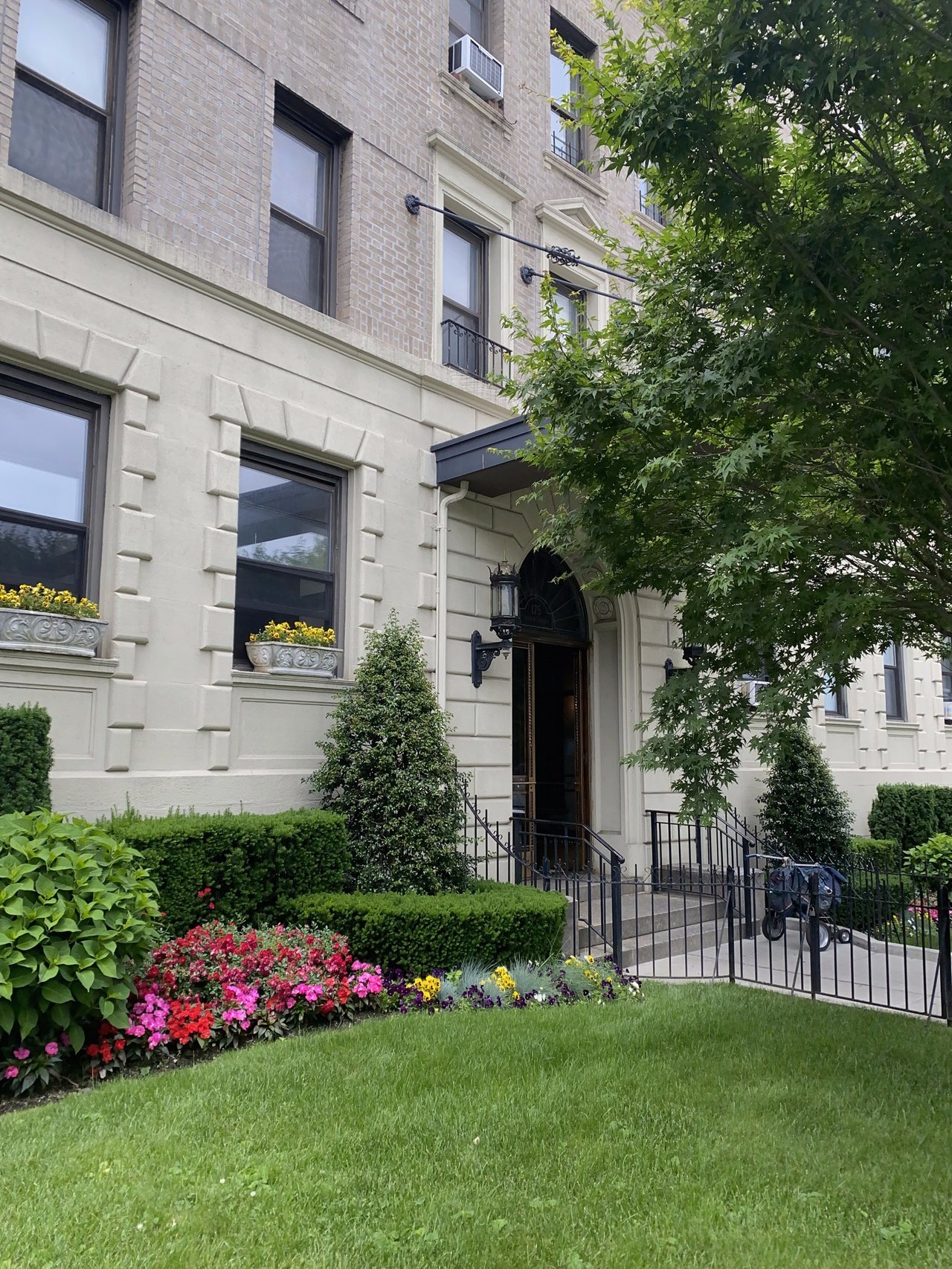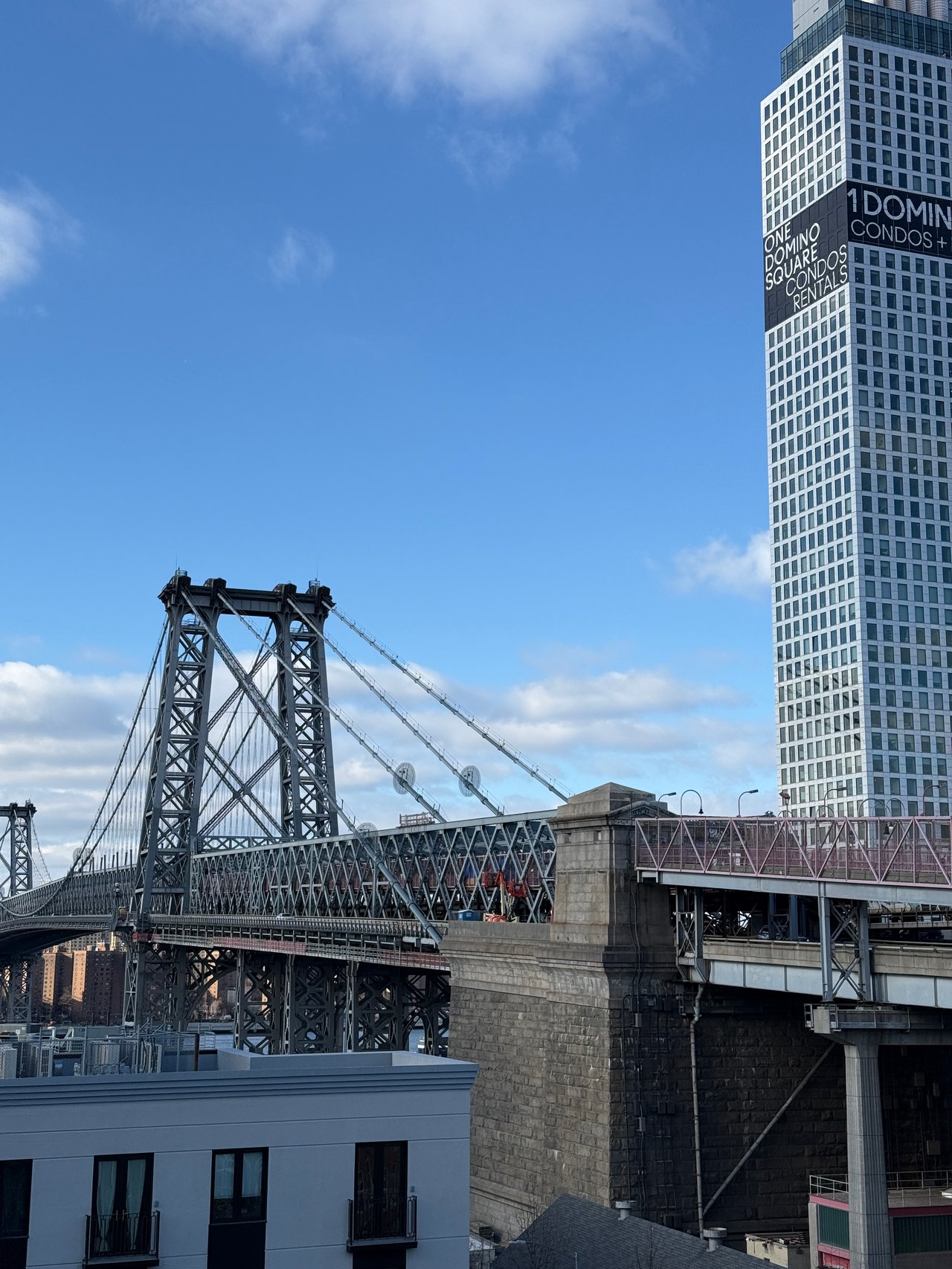
The towers on Kent Avenue were zoned into being by one City Council vote in 2005. The walk-ups a few blocks inland went up in the years after the Williamsburg Bridge opened in 1903. The waterfront gives you a staffed building and a property tax bill that may be about to change. The blocks off Bedford give you an older building with a monthly cost that is mostly what it looks like. Both run on the L.
Until 2005 the East River edge of Williamsburg and Greenpoint was zoned for manufacturing. On May 11, 2005, the City Council approved the Department of City Planning's rezoning of nearly 200 blocks, opening two miles of waterfront to high-density housing and requiring the developers of waterfront sites to build public open space along the river [1][2]. The affordable housing was an incentive rather than a requirement: a developer who included it could build more floor area, and the Council turned down calls to make it mandatory [3]. The Kent Avenue towers, Northside Piers, the Williamsburg Waterfront open space and Domino Park all come out of that vote; the refinery itself stopped operating in 2004 and its 1884 filter, pan and finishing house is a landmark [4]. On July 29, 2009, the Council followed with a contextual rezoning of 175 inland blocks that put height limits on the residential side streets [5]. That is why the towers stop where they stop.
The inland stock is a century older. The Williamsburg Bridge opened on December 19, 1903, and carried Lower East Side families across the river [6]; the tenements and rowhouses built for them are the walk-ups on the side streets today. The small condominiums on those streets, six to twenty units with no staff, were built or converted in the years around the two rezonings, and the 2009 height limits mean the block will stay roughly the height it is.
Both sides share the train. The L's Bedford Avenue stop is its first in Brooklyn, and the whole neighborhood runs on it along with the G, J and M; the tunnel Hurricane Sandy flooded in 2012 was rehabilitated by April 2020 [7]. NYC Ferry's East River route stops at North Williamsburg, at the foot of North 6th Street, and at South Williamsburg [8].
On the waterfront, the monthly common charge pays for lobby staff, elevators, a gym and often a pool, and property taxes come separately. That is where the waterfront differs. Many of the towers were built under 421-a, the state program that exempted new buildings from most property taxes for a fixed term, with the bill rising in steps to the full amount. The program closed to new construction on June 15, 2022, and its replacement, 485-x, does not cover condominiums in these price ranges, so the abatements that exist are the ones that will exist [9]. Before you buy on Kent Avenue, ask for the building's 421-a schedule: the year the benefit started, the year it ends, and the tax the unit will pay without it. The step-up is in what happens when a 421-a abatement ends.
Off Bedford, a six-unit condominium has no staff and a small budget, so the common charge is lower and the risk sits elsewhere: each owner carries a sixth of every roof, boiler and facade bill, and a small reserve fund may not cover a large one. Read the last two years of budgets and the minutes for any assessment. A co-op walk-up adds a board that approves buyers and a maintenance charge that includes the building's taxes; the differences are in co-op vs condo, and the fee some co-ops charge on the way out is in how flip tax works. I sat on the board of a six-story condo a few blocks from Bedford Avenue when it took out a loan for the roof and facade in 2022. Nobody on the block saw it from the street. Every owner saw it on the monthly statement for years.
Williamsburg is the most condo-heavy market I work in, and the figures do not separate waterfront from inland, so read them as the neighborhood number rather than the price of either product. In the six months to November 10, 2026, 283 apartments closed in Williamsburg at a median of $1,535,000, and 275 of them were condominiums. The condo median was $1,600,000 and $1,544 a square foot, from the 267 sales that reported square footage; the median sale closed 3.9 percent under its asking price after 51 days on the market. Only eight co-ops closed in the same period (RealPlus, Manhattan, Brooklyn and Queens listing data, pulled November 10, 2026) [10].
If you want a staffed building, a river view and the ferry, and you will read the tax schedule before you sign, look at the waterfront. If you want a building that predates the towers, the lowest fixed monthly cost and a shorter walk to the L, look at the blocks off Bedford, and read the building's budget as carefully as you would read a tower's tax schedule. The cash either one takes beyond the down payment is in how much cash you need to buy, and the rest of the neighborhood is on the Williamsburg page. For the 421-a schedule or the budget of a building you are considering, email me at [email protected] or call 212-516-4569.
This is general information, not tax or legal advice.
Ilana Lee, Licensed Real Estate Salesperson, ILNY. Updated November 24, 2026.
Sources
- NYC Department of City Planning: Greenpoint-Williamsburg Rezoning, adopted May 11, 2005
- CityLand: North Brooklyn rezoning gains final approval, May 11, 2005
- CityLand: Council modifies massive rezoning plan for Brooklyn, May 2005
- NYC Landmarks Preservation Commission: Havemeyers & Elder Filter, Pan & Finishing House designation report, September 25, 2007
- CityLand: North Brooklyn rezoned, August 15, 2009
- Library of Congress, Today in History: December 19, opening of the Williamsburg Bridge, 1903
- Brooklyn Paper: MTA completes L train tunnel work early and below budget, April 26, 2020
- NYC Ferry: East River route, checked November 10, 2026
- Nixon Peabody: The developer's guide to Affordable Neighborhoods for New Yorkers (485-x), January 16, 2025
- RealPlus apartment sales analytics, Williamsburg section, closed sales May 15 to November 10, 2026, pulled November 10, 2026