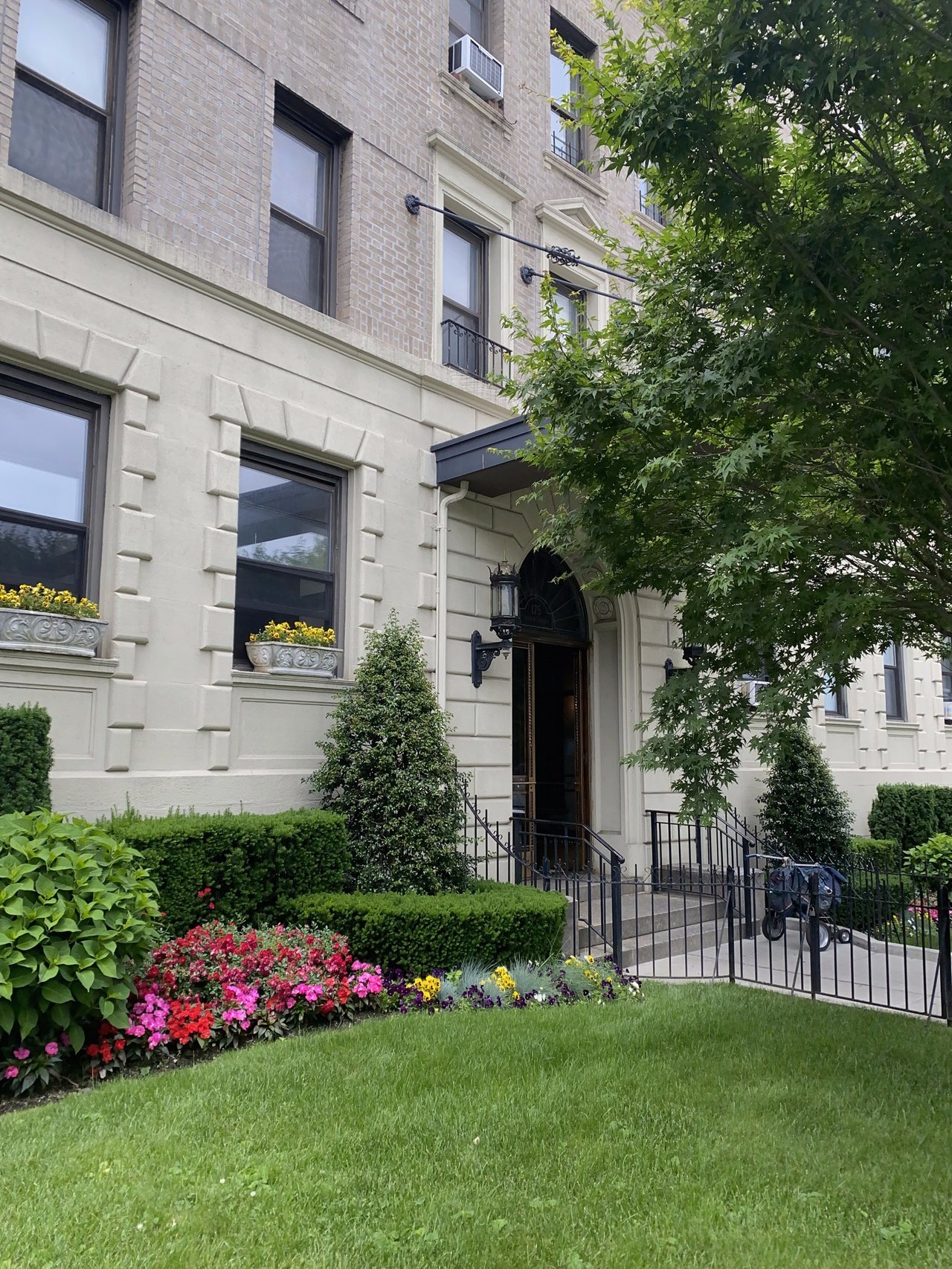
Getting a New York co-op ready to sell starts with the board's financing and sublet rules, because they decide who can buy, and with the building documents a buyer's attorney will ask for. A condo sells to whoever can pay. A co-op sells to whoever the board approves and a bank will lend to in that building.
Start with the financing rule. A co-op is a corporation. The buyer purchases shares and a proprietary lease, the long-term lease that gives a shareholder the right to live in the apartment. The board decides how much of the price a buyer may borrow, and most co-op boards require at least 20 to 25 percent down, with some particularly restrictive buildings asking for up to 50 percent [1]. Boards also look at the debt-to-income ratio: all monthly debts, including the new loan and the maintenance, divided by gross monthly income. Experts who spoke to Brick Underground put the ideal for a New York co-op at 22 to 24 percent, with easier buildings accepting as much as 33 percent [2]. A buyer earning $30,000 a month before tax, with $7,000 a month in debts once the new mortgage and maintenance are counted, sits at about 23 percent. Boards generally want one to two years of mortgage and maintenance payments left in the bank after closing, which they call post-closing liquidity [3]. The listing will say "20 percent financing permitted" or "all cash," and that one line shapes who calls.
The sublet policy decides whether investors can bid. Each building sets its own rules on subletting, meaning renting the apartment to a tenant. A building that bars sublets takes buyers who plan to rent the apartment out of the pool; one that allows sublets after a period of owner residence keeps some of them. Lenders read the same rule from the other side, because banks do not want to see too many sublet or non-owner-occupied apartments in a building they lend in [4].
Whether a bank will lend in the building. A buyer's lender approves the building as well as the buyer. Fannie Mae guidance has lenders restrict loans to buildings whose budget sets aside 10 percent for reserves [4][5]. A master insurance policy that has lapsed, or that falls short of Fannie Mae and Freddie Mac guidelines, causes delays, and banks need at least a temporary certificate of occupancy before they will finance at all [4]. None of this is something a seller can fix before listing, though knowing it early says whether to expect cash offers.
Flip tax and right of first refusal. A flip tax is a fee the co-op charges when shares change hands. Most buildings that have one charge about 1 to 2 percent of the sale price, and some charge more. Whether the buyer or the seller pays is negotiable [6]. On a $1,500,000 sale, a 2 percent flip tax is $30,000, which belongs in the seller's estimate of net proceeds before a price is set. A right of first refusal, a board's option to buy the apartment at the contract price, belongs to condos, and boards very rarely use it [7]. A New York City co-op board can instead reject a buyer for any lawful reason and does not have to say why [8]. Fair housing laws bar a rejection based on a protected class, which in New York City includes lawful source of income [16].
The board now has a deadline. Under Local Law 58 of 2026, a co-op with 10 or more units must acknowledge a purchase application within 15 days, and the application counts as complete if it does not. Once the application is complete, the board has 45 days to tell the buyer by email whether consent is granted, granted with conditions or denied, and it may extend that once by up to 14 days; a publicized July and August recess pauses the clock. The law covers applications submitted on or after July 28, 2026, with civil penalties starting at $1,000 [9]. For a seller, that puts a ceiling on how long a deal can sit in the board's hands.
The documents a buyer will ask for. Before an offer, a buyer can usually see everything except the board minutes: the proprietary lease, the house rules, the financial statements, the offering plan (the disclosure document filed when the building was built or converted) and the alteration agreement, which sets the rules for renovations. The buyer's attorney reads the minutes once an offer is accepted [10]. A seller who renovated should find the signed alteration agreement and the board's sign-off for that work, because the buyer's attorney will ask. With the building package ready before the first offer, due diligence can start as soon as a deal is agreed.
Staging and photographs. The staging data that exists is national and reported by agents, so it points in a direction without proving much. In the National Association of Realtors' 2025 Profile of Home Staging, a survey of about 1,200 real estate professionals, 83 percent of buyers' agents said staging made it easier for buyers to picture a property as their future home. About 30 percent of respondents reported a sale price increase of 1 to 10 percent that they attributed to staging, and the median cost of a staging service was about $1,500 [11]. I know of no New York data comparing staged and unstaged sales. The listing photos are what a buyer sees first, so they are worth taking after the apartment is cleared and lit.
The first weeks on the market. StreetEasy shows a listing's days on market in its property history, next to any price changes [12]. Under the Real Estate Board of New York's listing rules, the count resets to zero only when a sale closes or when the listing has been withdrawn or cancelled for 30 consecutive days, a threshold REBNY cut from 90 days in its 2026 changes [13]. StreetEasy likewise requires the old listing to be off the market for at least 30 consecutive days before a new one can start a fresh count [14]. A week off the market does not make a listing new. In September 2026, the median sales listing had been on the market 102 days in Manhattan, 77 in Brooklyn and 78 in Queens, according to StreetEasy [15]. The early weeks are when a price gets tested.
What to do next. Ask the managing agent for the purchase application, the financing and sublet rules in writing, the flip tax and the current financial statements. When you want to talk through value and timing, start on my selling page or get in touch at [email protected] or 212-516-4569. For what to look for once offers arrive, read What's in an offer on a NYC apartment?
This is general information, not tax or legal advice.
Ilana Lee, Licensed Real Estate Salesperson, ILNY. Updated November 9, 2026.
Sources
- Brick Underground: What's the difference between a condo and a co-op in NYC? Which one should you buy?, November 4, 2019
- Brick Underground: What debt-to-income ratio do you need to buy a co-op in NYC?, March 20, 2023
- StreetEasy: Top reasons for co-op board rejections, October 17, 2018
- Brick Underground: 6 reasons why your mortgage application might be denied or delayed that have nothing to do with you, November 11, 2025
- Fannie Mae: Project standards requirements FAQs, March 2026
- Brick Underground: What's the average flip tax for a condo or co-op in New York City?, April 1, 2024
- Brick Underground: What does "right of first refusal" mean when you are selling a NYC condo?, May 16, 2024
- Habitat: the co-op board rejection process, April 27, 2026
- CooperatorNews: Local Law 58: it's about time (and transparency), September 3, 2026
- Brick Underground: What information can I get about how a co-op building is run before I put in an offer?, November 22, 2021
- National Association of Realtors: Staging to sell: the real estate shift toward picture-perfect homes, May 6, 2025
- The Real Deal: StreetEasy's quiet listing changes, October 11, 2025
- REBNY: 2026 UCBA changes, December 15, 2025
- StreetEasy Help Center: How can I reset my listing's days on the market?
- StreetEasy: New sales listings in NYC surge to highest level in four years (September 2026 market report), October 15, 2026
- NYC Commission on Human Rights: housing protections under the NYC Human Rights Law